The birds of Mt Gramos
The nature of Mt Gramos
The birds of Mt Gramos

Compressing the distance, this picture from the east shows the sequence of the three main components of the Mt Gramos landscape:
agroforestry, montane forest, alpine terrain
(πατήστε για μεγέθυνση).
Compressing the distance, this picture from the east shows the sequence of the three main components of the Mt Gramos landscape:
agroforestry, montane forest, alpine terrain
A total of 145 bird species have been recorded on Mt Gramos and the western part of Mt Voio, more than 100 of which breed in the area.
As the mountain with the largest alpine meadows, endowed with vast forests, full of flocks of small livestock and subject to very little disturbance from human activities and settlement, Mt Grammos supported the entire mountain bird fauna of the Balkans until the middle of the 20th century.

Golden eagle (Aquila chrysaetos)
(Click to enlarge).
Golden eagle (Aquila chrysaetos)
The Golden Eagle (Aquila chrysaetos) reigned over the peaks and ridges, while alpine Red-billed Choughs (Pyrrhocorax pyrrhocorax) grazed — quite literally — in the meadows. Furthermore, older records mention the presence of the Egyptian Vulture (Neophron percnopterus), the Griffon Vulture (Gyps fulvus), and the Cinereous Vulture (Aegypius monachus) — birds associated not with high altitudes per se, but with the traditional pastoralism of alpine grasslands. Today, no vulture species is recorded in the area.
Apart from the loss of the aforementioned three vulture species and the absence of the large forest birds — Western Capercaillie (Tetrao urogallus), Hazel Grouse (Tetrastes bonasia) and Black Grouse (Tetrao tetrix) — recorded in the area in the past and now having an extremely limited presence in the Balkans, Mt Grammos retains most of the bird diversity characteristic of a large mountain environment.
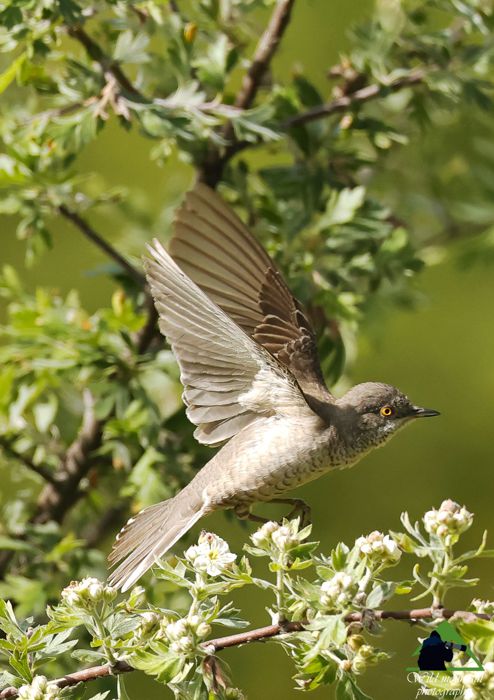
Barred warbler (Curruca nisoria)
The abrupt changes that occurred during and after the Civil War — specifically, the initialy intense (albeit unproductive) human presence followed by the depopulation of the mountainous arc — led directly to the disappearance of numerous species that had existed in a state of ecological interdependence with the traditional economy.
Today, the alpine zone hosts only a few species typical of high-altitude mountain ecosystems. Among birds of prey, the Golden Eagle and two or three smaller eagle species remain, while the Griffon Vulture still makes sporadic appearances.

The White-winged Snowfinch, together with the Alpine Accentor and the Horned Lark, forms the characteristic trio of alpine birds in Greece
(Click to enlarge).
The White-winged Snowfinch, together with the Alpine Accentor and the Horned Lark, forms the characteristic trio of alpine birds in Greece
The Eurasian Eagle-Owl (Bubo bubo) and the Black Woodpecker (Dryocopus martius) still inhabit the forests of Mt Grammos, alongside eight other woodpecker species.
Several species with a broader altitudinal range are also observed, including Rock Partridge (Alectoris graeca), Ortolan Bunting (Emberiza hortulana), Yellowhammer (Emberiza citrinella), Common Rock Thrush (Monticola saxatilis), Greater Short-toed Lark (Calandrella brachydactyla) and Tawny Pipit (Anthus campestris).
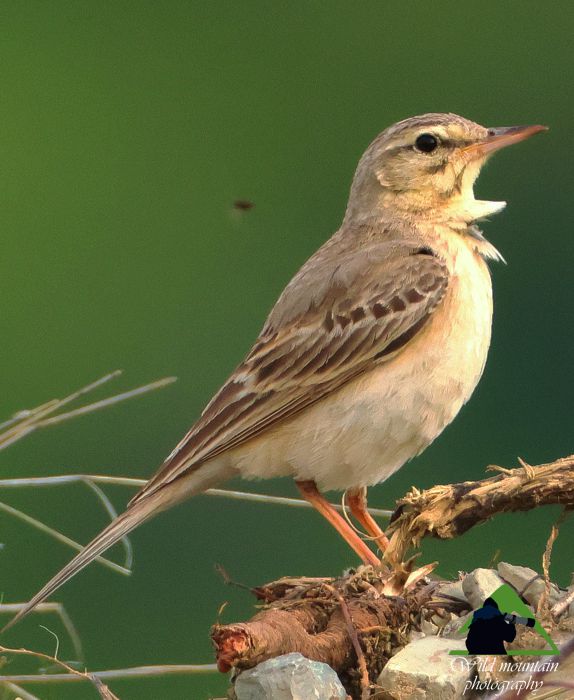
Tawny pipit (Anthus campestris)
It should be noted, however, that Mt Grammos lacks the habitats of the lower altitudinal zones and specifically the most characteristic types of Mediterranean vegetation, such as phrygana and shrublands: these vegetation types not only foster greater biodiversity but, more importantly, provide opportunities for seasonal complementarity between foraging and refuge zones. Here, the habitats are predominantly mountainous; their richness stems largely from a mosaic jointly shaped by the terrain, soil and climatic conditions, and human activity. The area’s status as a border region also played a decisive role, granting it moments of tranquility amidst the ebb and flow of human history.
Passerines are more conspicuous, including species adapted to the weather conditions and resources of high altitudes, such as the White-winged Snowfinch (Montifringilla nivalis), the Horned Lark (Eremophila alpestris), and the Alpine Accentor (Prunella collaris).
Because birds have fairly clear preferences regarding habitat type and other characteristics such as elevation and land-use history, their diversity and adaptations are explored further in the dedicated chapters focusing on the mountain’s major landscapes.

Woodlark (Lullula arborea)
Finally, surveys in the wider area have also recorded certain species that leave Lake Kastoria to roam local rivers and ponds in search of food—such as the Great Cormorant (Phalacrocorax carbo), Common Sandpiper (Actitis hypoleucos), Grey Heron (Ardea cinerea), and Little Ringed Plover (Charadrius dubius). These occasional sightings are not included in the table below.
Birds of prey
Among the most sensitive taxonomic groups of birds, the raptors, the area supports a significant number of both diurnal and nocturnal species.

Short-toed Snake Eagle (Circaetus gallicus)
Among the large eagles we find the Golden Eagle (Aquila chrysaetos), Booted Eagle (Aquila pennata) and Short-toed Snake Eagle (Circaetus gallicus). The latter is a summer visitor, arriving in early March, nesting in tall trees in the pine forest and departing in September.

Sparrowhawk (Accipiter nisus)
Of the large forest hawks (Accipitridae), all three Greek species occur here: Northern Goshawk (Astur gentilis), Eurasian Sparrowhawk (Accipiter nisus) and Levant Sparrowhawk (Tachyspiza brevipes). Among the smaller falcons (genus Falco), the species expected across the area’s range of habitats are present: Peregrine Falcon (Falco peregrinus), Common Kestrel (Falco tinnunculus) and Eurasian Hobby (Falco subbuteo), while Red-footed Falcons (Falco vespertinus) pass through the agricultural margins and Eleonora’s Falcons (Falco eleonorae) spread into the subalpine landscapes in early autumn.
In early summer, of particular interest is the presence of young Montagu’s Harriers (Circus pygargus), which arrive here from the lakeside areas of Kastoria and Florina.
| English name |
Latin name |
|---|---|
| Griffon vulture | Gyps fulvus |
| Golden eagle | Aquila chrysaetos |
| Short-toed snake eagle | Circaetus gallicus |
| Booted eagle | Aquila pennata |
| Bonelli's eagle | Aquila fasciata |
| Common buzzard | Buteo buteo |
| Long-legged buzzard | Buteo rufinus |
| European honey buzzard | Pernis apivorus |
| Levant sparrowhawk | Tachyspiza brevipes |
| Eurasian goshawk | Astur gentilis |
| Eurasian sparrowhawk | Accipiter nisus |
| Peregrine falcon | Falco peregrinus |
| Kestrel | Falco tinnunculus |
| Eleonora's falcon | Falco eleonorae |
| Eurasian hobby | Falco subbuteo |
| Red-footed falcon | Falco vespertinus |
| Eurasian hobby | Falco subbuteo |
| Montagu's harrier | Circus pygargus |
Owls
Among nocturnal raptors, the most notable presences are the Boreal Owl (Aegolius funereus) and the Eurasian Eagle-Owl (Bubo bubo).
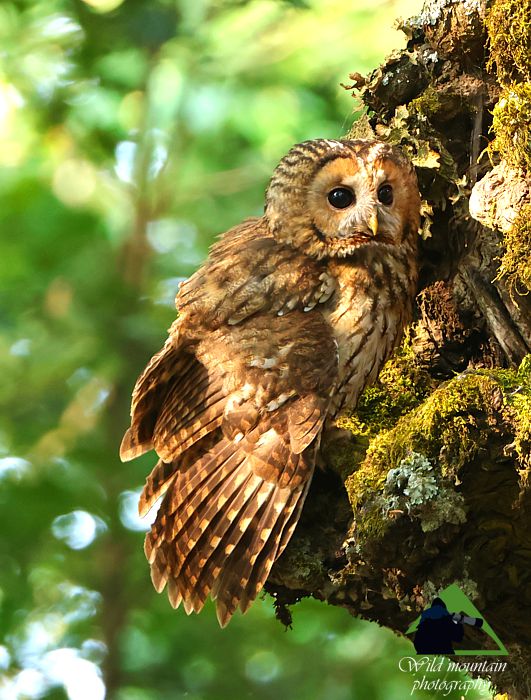
Tawny Owl (Strix aluco)
| English name |
Latin name |
|---|---|
| Eagle owl | Bubo bubo |
| Boreal owl | Aegolius funereus |
| Little Owl | Athene noctua |
| Tawny Owl | Strix aluco | Scops Owl | Otus scops |
Corvids

Red-billed chough (Pyrrhocorax pyrrhocorax)
Small flocks of Red-billed Choughs — an agile corvid of alpine landscapes with a highly fragmented distribution in Greece and a very small overall population — fly about the peaks.
| English name |
Latin name |
|---|---|
| Raven | Corvus corax |
| Red-billed chough | Pyrrhocorax pyrrhocorax |
| Alpine chough | Pyrrhocorax graculus |
| Carrion crow | Corvus cornix |
| Eurasian jay | Garrulus glandarius |
| Eurasian magpie | Pica pica |
| Common starling | Sturnus vulgaris |
Woodpeckers
Thanks to the great variety of forest environments — mature beech and conifer forests, open stands, meadows with standing dead trees, logged zones and untouched areas — woodpeckers, large insectivorous birds that depend on the presence of diseased and dead trees, are represented here by 9 of the 10 Greek species (only Picoides tridactylus has not been recorded; in Greece it is recorded sporadically only in the Rhodope mountain range).
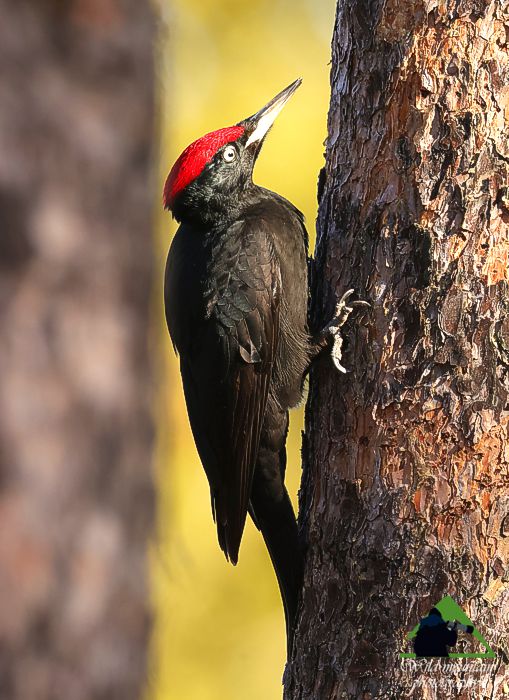
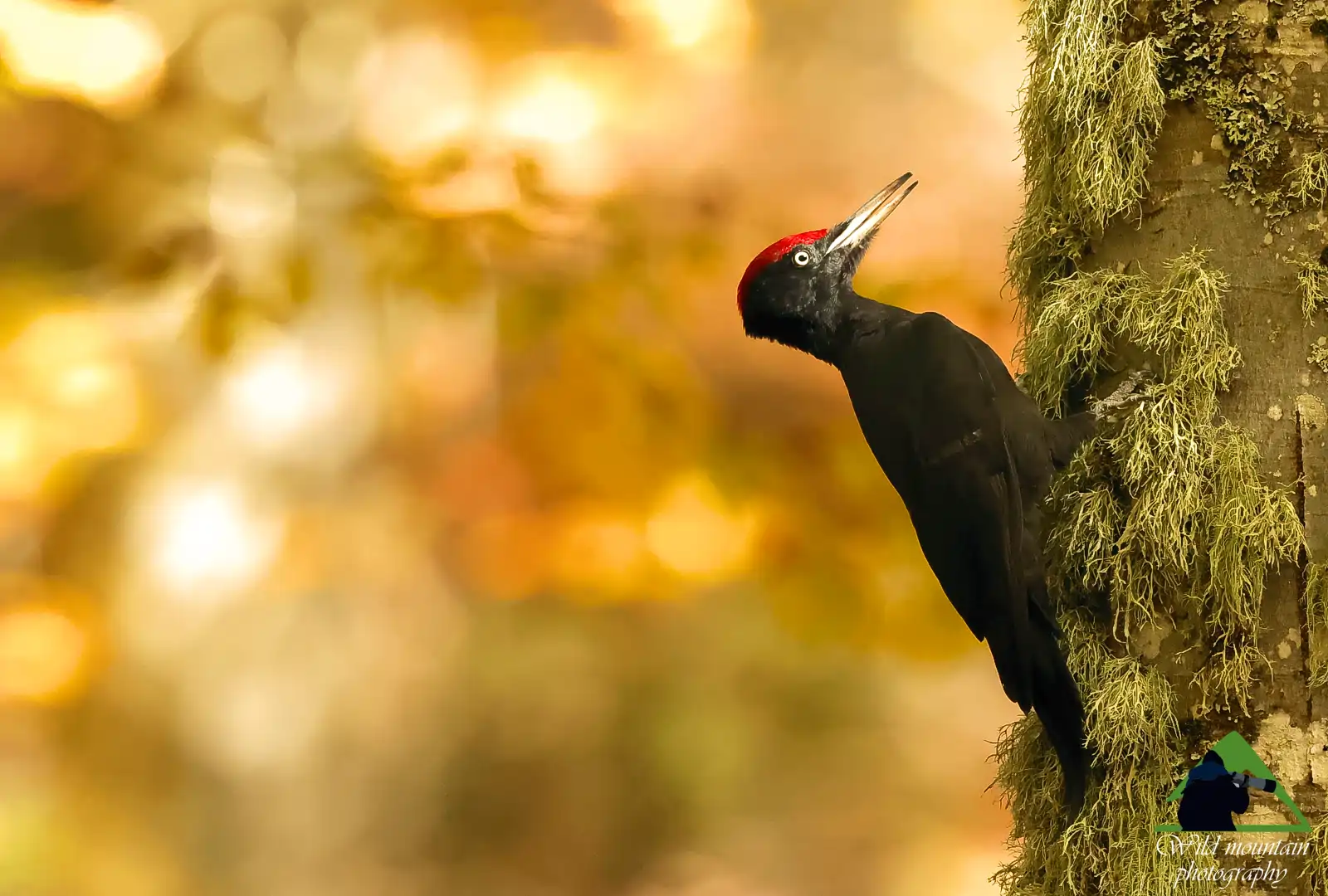
Black woodpecker (Dryocopus martius)
This remarkable diversity is further enhanced by the presence of noteworthy species such as the Black Woodpecker and the White-backed Woodpecker.
The various woodpecker species share the area and food sources with minimal overlap: The Black Woodpecker (Dryocopus martius) inhabits the heart of the mountain forest — in both pure coniferous stands and mixed beech forests with clusters of black pine — and specializes in extracting wood-boring insects from the decaying trunks of dead trees.
The Green Woodpecker (Picus viridis) feeds primarily on ants, which it gathers from the ground. Consequently, it frequents deciduous forests interspersed with ravines and meadows, as well as agroforestry areas. However, it also requires old trees for nesting.

White-backed woodpecker (Dendrocopos leucotos)
The Grey-headed Woodpecker (Picus canus) has a mixed diet consisting of both ground-dwelling and bark-dwelling insects. It inhabits coniferous and broad-leaved forests—such as plane tree groves with poplars—featuring clearings and meadows, across a wide altitudinal range. The Lesser Spotted Woodpecker (Dryobates minor) inhabits similar landscapes—such as the areas surrounding old, now-abandoned mountain settlements. Its beak lacks the striking power of its larger relatives, so it searches for insects and their larvae beneath the bark of dead trees.

Middle spotted woodpecker (Dendrocoptes medius)
The White-backed Woodpecker (Dendrocopos leucotos) prefers mixed forests of mature conifers (Abies and Pinus) and deciduous trees (specifically beech), ranging from mid-altitudes up to the tree line. It occurs very sparsely across a wide distribution range, and being extremely wary, it is one of the most difficult species to spot (and photograph).
The Great Spotted Woodpecker (Dendrocopos major) inhabits mainly open oak and other deciduous forests in the Grammos region; its diet varies seasonally, ranging from ants and beetles to seeds and fruits.
The Middle Spotted Woodpecker (Dendrocopos medius) also frequents this type of forest, as well as riparian forests (featuring ash and willow trees) at lower altitudes.
The Syrian Woodpecker (Dendrocopos syriacus) forages on the bark of diseased or old trees in semi-mountainous forests and in patches of deciduous trees interspersed with old orchards. It alternates between insects and fruits, depending on the season.
Finally, the smallest of them all, the Wryneck (Jynx torquilla), arrives in the summer and settles in lowland and mid-elevation oak forests. It primarily collects ants, foraging for them either in rotting logs or on the ground.
| English name |
Latin name |
|---|---|
| Black woodpecker | Dryocopus martius |
| European green woodpecker | Picus viridis |
| Grey-headed woodpecker | Picus canus |
| White-backed woodpecker | Dendrocopos leucotos |
| Great spotted woodpecker | Dendrocopos major |
| Middle spotted woodpecker | Dendrocoptes medius |
| Syrian woodpecker | Dendrocopos syriacus |
| Lesser spotted woodpecker | Dryobates minor |
| Eurasian wryneck | Jynx torquilla |
Coraciiformes
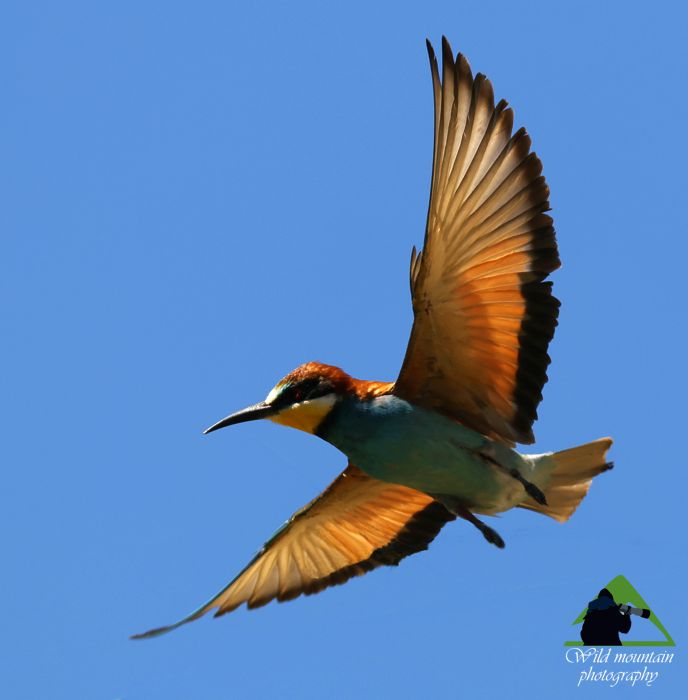
European bee-eater (Merops apiaster)
| English name |
Latin name |
|---|---|
| European bee-eater | Merops apiaster |
| Eurasian hoopoe | Upupa epops |
Storks

Black stork (Ciconia nigra)
Ο κοινός Λευκοπελαργός φωλιάζει σε πολλές θέσεις στην περίμετρο του βουνού, ενώ μέσα στα όρια της περιοχής φωλιάζει ο Μαυροπελαργός.
| English name |
Latin name |
|---|---|
| White stork | Ciconia ciconia |
| Black stork | Ciconia nigra |
Columbiformes
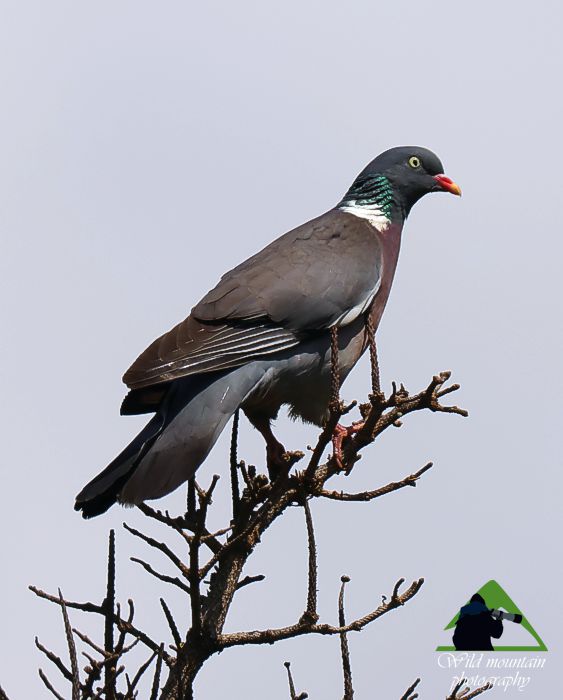
Wood pigeon (Columba palumbus)
| English name |
Latin name |
|---|---|
| European turtle dove | Streptopelia turtur |
| Stock dove | Columba oenas |
| Common wood pigeon | Columba palumbus |
Swallows, Martins & Swifts
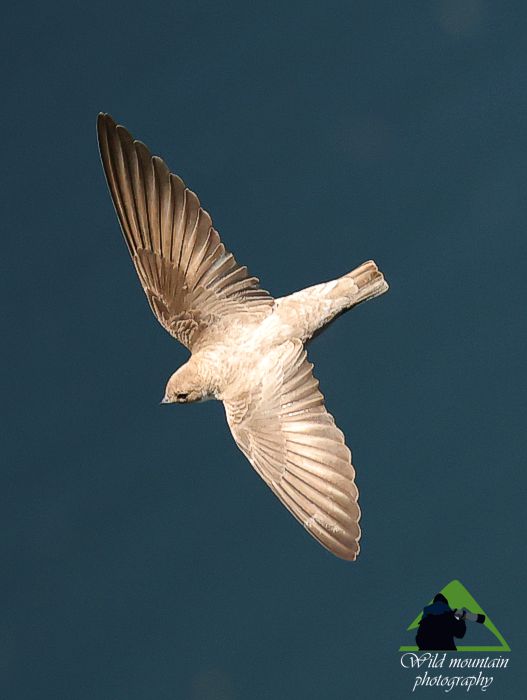
Sand martin (Riparia riparia)
| English name |
Latin name |
|---|---|
| Western house martin | Delichon urbicum |
| Barn swallow | Hirundo rustica |
| Red-rumped swallow | Cecropis daurica |
| Sand martin | Riparia riparia |
| Eurasian crag martin | Ptyonoprogne rupestris |
| Alpine swift | Tachymarptis melba |
| Common swift | Apus apus |
| Pallid swift | Apus pallidus |
Galliformes
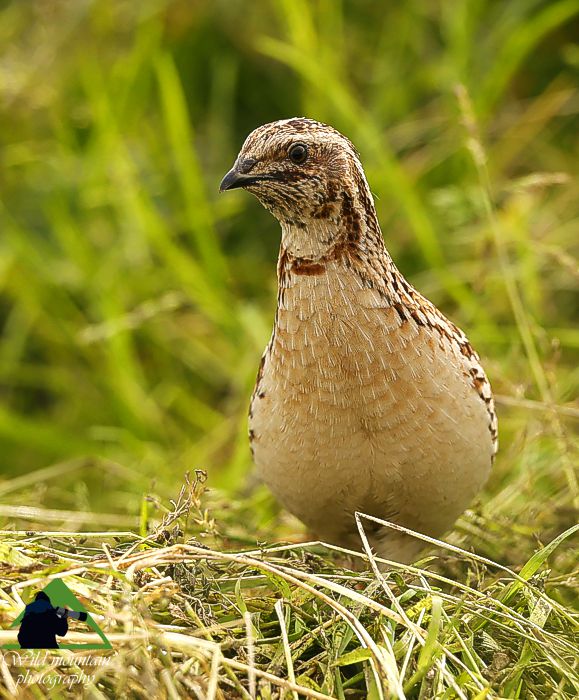
Ορτύκι (Coturnix coturnix)
| English name |
Latin name |
|---|---|
| Rock partridge | Alectoris graeca |
| Eurasian woodcock | Scolopax rusticola |
| Common quail | Coturnix coturnix |
Cuckoos
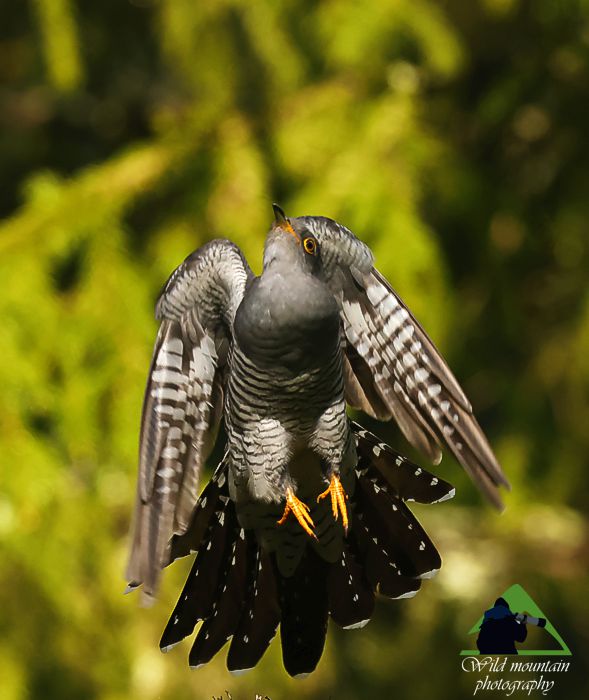
Common cuckoo (Cuculus canorus)
| English name |
Latin name |
|---|---|
| Common cuckoo | Cuculus canorus |
Finches
| English name |
Latin name |
|---|---|
| European goldfinch | Carduelis carduelis |
| Eurasian chaffinch | Fringilla coelebs |
| Brambling | Fringilla montifringilla |
| White-winged snowfinch | Montifringilla nivalis |
| Red crossbill | Loxia curvirostra |
| Common linnet | Linaria cannabina |
| European serin | Serinus serinus |
| European greenfinch | Chloris chloris |
| Eurasian siskin | Spinus spinus |
| Hawfinch | Coccothraustes coccothraustes |
| Eurasian bullfinch | Pyrrhula pyrrhula |
Thrushes

Fieldfare (Turdus pilaris)
| English name |
Latin name |
|---|---|
| Mistle thrush | Turdus viscivorus |
| Song thrush | Turdus philomelos |
| Fieldfare | Turdus pilaris |
| Redwing | Turdus iliacus |
| Common blackbird | Turdus merula |
| Blue rock thrush | Monticola solitarius |
| Ring ouzel | Turdus torquatus |
| Common rock thrush | Monticola saxatilis |
Buntings
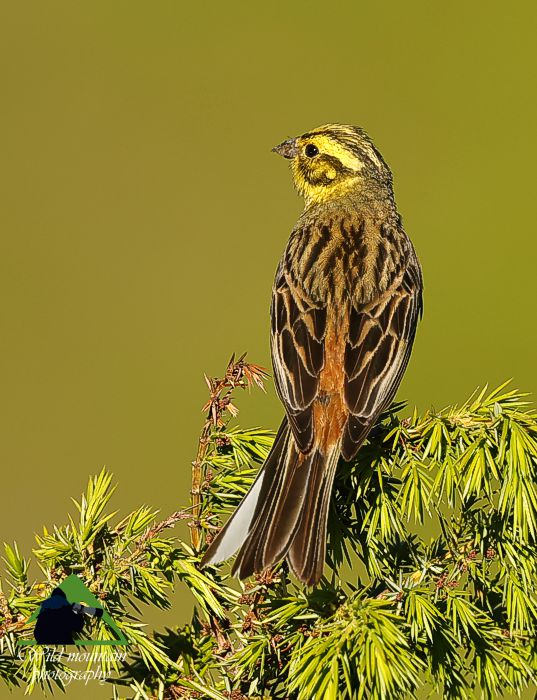
Yellowhammer (Emberiza citrinella)
| English name |
Latin name |
|---|---|
| Corn bunting | Miliaria calandra |
| Black-headed bunting | Emberiza melanocephala |
| Ortolan bunting | Emberiza hortulana |
| Rock bunting | Emberiza cia |
| Cirl bunting | Emberiza cirlus |
| Yellowhammer | Emberiza citrinella |
| Cretzschmar's bunting | Emberiza caesia |
Sparrows
| English name |
Latin name |
|---|---|
| House sparrow | Passer domesticus |
| Eurasian tree sparrow | Passer montanus |
Shrikes

Woodchat shrike (Lanius senator)
| English name |
Latin name |
|---|---|
| Red backed shrike | Lanius collurio |
| Woodchat shrike | Lanius senator |
Wagtails & Pipits

Grey Wagtail (Motacilla cinerea)
| English name |
Latin name |
|---|---|
| White Wagtail | Motacilla alba |
| Grey Wagtail | Motacilla cinerea |
| Western Yellow Wagtail | Motacilla flava |
| Tawny pipit | Anthus campestris |
| Water pipit | Anthus spinoletta |
| Tree pipit | Anthus trivialis |
Larks

Horned lark (Eremophila alpestris)
| English name |
Latin name |
|---|---|
| Crested lark | Galerida cristata |
| Eurasian skylark | Alauda arvensis |
| Woodlark | Lullula arborea |
| Greater short-toed lark | Calandrella brachydactyla |
| Horned lark | Eremophila alpestris |
Ποταμίδες & Στριτσίδες
| English name |
Latin name |
|---|---|
| Icterine warbler | Hippolais icterina |
Παπαδίτσες, τσομπανάκοι και συγγενή

Crested tit (Lophophanes cristatus)
In the forests of Mt Gramos — a mosaic of black pine, fir, and beech stands — lives a wide variety of woodland bird species.
The beech forest offers the richest opportunities for nesting and foraging. The heavy rustling of its dense foliage is barely interrupted by the faint calls of treecreepers, tits, warblers, and goldcrests.
| English name |
Latin name |
|---|---|
| Great tit | Parus major |
| Coal tit | Periparus ater |
| Long-tailed tit | Aegithalos caudatus |
| Eurasian blue tit | Cyanistes caeruleus |
| Crested tit | Lophophanes cristatus |
| Willow tit | Poecile montanus |
| Marsh tit | Poecile palustris |
| Wallcreeper | Tichodroma muraria |
| Sombre tit | Poecile lugubris |
| Wren | Troglodytes troglodytes |
| Short-toed treecreeper | Certhia brachydactyla |
| Eurasian treecreeper | Certhia familiaris |
| Western rock nuthatch | Sitta neumayer |
| Eurasian nuthatch | Sitta europaea |
Forest warblers and kinglets

Common firecrest (Regulus ignicapilla)
| English name |
Latin name |
|---|---|
| Eurasian blackcap | Sylvia atricapilla |
| Barred warbler | Curruca nisoria |
| Eastern subalpine warbler | Curruca cantillans |
| Common whitethroat | Curruca communis |
| Lesser Whitethroat | Curruca curruca |
| Common firecrest | Regulus ignicapilla |
| Goldcrest | Regulus regulus |
Accentors

Alpine Accentor (Prunella collaris)
| English name |
Latin name |
|---|---|
| Alpine accentor | Prunella collaris |
| Dunnock | Prunella modularis |
Leaf warblers
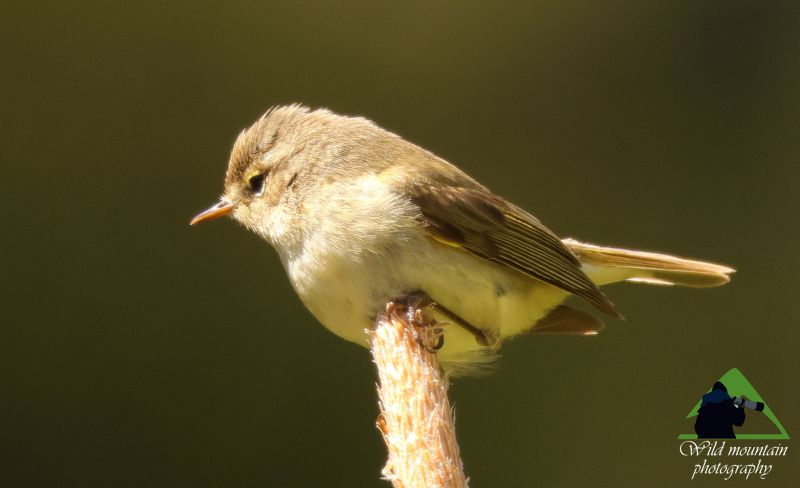
Eastern Bonelli's warbler (Phylloscopus orientalis)
| English name |
Latin name |
|---|---|
| Willow warbler | Phylloscopus trochilus |
| Wood warbler | Phylloscopus sibilatrix |
| Common chiffchaff | Phylloscopus collybita |
| Eastern Bonelli's warbler | Phylloscopus orientalis |
Nightjars
| English name |
Latin name |
|---|---|
| European nightjar | Caprimulgus europaeus |
Flycatchers

Black redstart (Phoenicurus ochruros)
| English name |
Latin name |
|---|---|
| Spotted flycatcher | Muscicapa striata |
| Collared flycatcher | Ficedula albicollis |
| Semicollared flycatcher | Ficedula semitorquata |
| European pied flycatcher | Ficedula hypoleuca |
| Red-breasted flycatcher | Ficedula parva |
| Black redstart | Phoenicurus ochruros |
| Common redstart | Phoenicurus phoenicurus |
| Northern wheatear | Oenanthe oenanthe |
| Western black-eared wheatear | Oenanthe melanoleuca |
| Whinchat | Saxicola rubetra |
| European stonechat | Saxicola rubicola |
| European robin | Erithacus rubecula |
| Common nightingale | Luscinia megarhynchos |
| Bluethroat | Luscinia svecica |
Dippers
| English name |
Latin name |
|---|---|
| White-throated dipper | Cinclus cinclus |
Sandpipers
| English name |
Latin name |
|---|---|
| Green sandpiper | Tringa ochropus |
Orioles
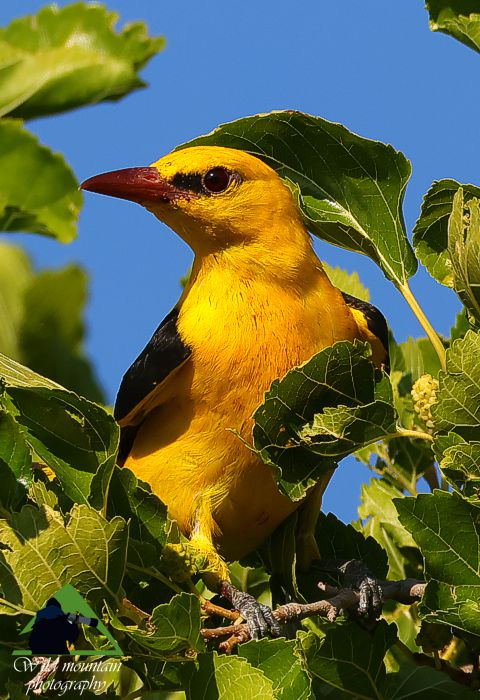
Eurasian Golden Oriole (Oriolus oriolus)
| English name |
Latin name |
|---|---|
| Eurasian Golden Oriole | Oriolus oriolus |